Moving the Goalposts - Definition and Examples
Contents
Definition
Moving the goalposts (also shifting the goalposts, raising the bar, or changing the rules) is an informal logical fallacy in which evidence that meets a stated standard is dismissed, and a new—usually harder—standard is demanded instead. The metaphor comes from sports: after a shot that would have scored, the posts are moved so the attempt no longer counts.
So what is moving the goalposts? It is not “asking careful questions.” It is revising the rules of proof mid-game so a conclusion never has to be conceded.
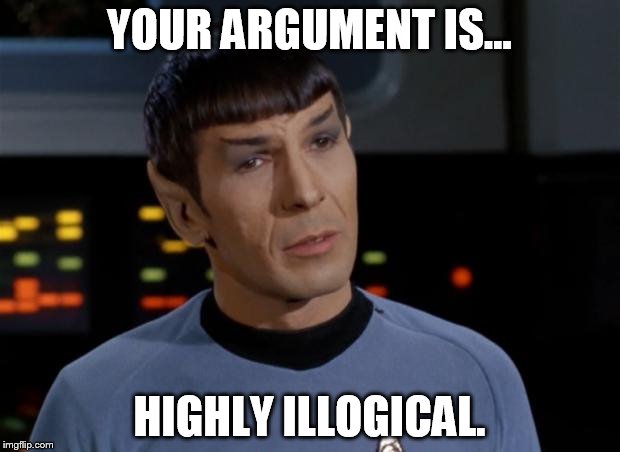
Typical structure:
|
|
The opposite informal move is lowering the bar: suddenly accepting weak evidence for a favored claim. Both distort fair standards; moving the goalposts is the escalating version.
Why It Works
The tactic preserves a preferred conclusion while looking like rigor. Each new demand can sound reasonable in isolation—“bigger sample,” “another replication,” “prove it can never fail”—but the pattern makes the claim unfalsifiable in practice. That is why Logically Fallacious and similar guides mark a strong initial “must / has to / required” claim followed by a string of ad hoc objections that end in an impossible request.
It is especially common in online debate, politics, science denial and science boosterism, workplace reviews, and interpersonal arguments where conceding feels costly.
Examples
What is an example of moving the goalposts?
Example 1 — Evidence escalation
|
|
The last demand is effectively unmeetable. The bar moved after earlier standards were cleared.
Example 2 — Workplace performance
|
|
If leadership was never part of the deal, this is changing the rules after the score.
Example 3 — Public health / policy debate
|
|
Retrospective hardening of success criteria is a classic goalpost shift—distinct from pre-registered endpoints agreed before the data arrive.
Example 4 — Personal dispute
|
|
The criterion quietly expanded from “availability” to “full itinerary.”
Vs Related Fallacies
How is moving the goalposts different from No True Scotsman?
How is moving the goalposts different from special pleading?
| Move | What changes | Fixed object | Sibling article |
|---|---|---|---|
| Moving the goalposts | Standard of proof | The claim’s subject | This page |
| No True Scotsman | Definition of the group | “True” membership | Appeal to purity |
| Special pleading | Scope of a rule (exception for this case) | The rule for others | See statistical special pleading |
| Strawman | Opponent’s position (weakened) | Your attack target | Misrepresentation |
| Ad hoc rescue | Auxiliary hypothesis added to save the claim | Proof bar may stay put | Saves the theory by patching |
Diagnostic questions:
- Did the bar move after it was cleared? → goalposts
- Was the category redrawn to eject a counterexample? → No True Scotsman
- Was a rule suspended only for the favored side? → special pleading
- Was the opponent’s view replaced with a weaker one? → strawman
These often stack. Someone may raise the evidence bar and redefine “real expert,” or pair goalpost shifts with moral high-ground framing so conceding feels like moral defeat.
When Raising Standards Is Not a Fallacy
Is raising standards always a fallacy? No.
Legitimate moves include:
- Stating a fixed, pre-agreed criterion before looking at the evidence
- Correcting an ambiguous standard and then sticking to the clarified version
- Escalating requirements for higher-stakes claims when that policy was announced in advance (e.g., stronger evidence for medical claims than for restaurant tips)
- Multipart arguments that were on the table from the start, not invented after each reply
The fallacy is the after-the-fact, motivated shift—especially when each new ask appears only once the previous one is met, and the sequence trends toward impossibility.
How to Respond
How can I respond to moving the goalposts?
- Quote the original standard — “We agreed that E1 would settle this.”
- Mark the met demand — “E1 is on the table.”
- Name the shift — “S2 is a new requirement.”
- Offer one locked criterion — “Pick a single standard now; we both live with the result.”
- If the bar won’t stabilize — Treat the position as not open to evidence in this exchange, and stop chasing an endless proof spiral.
A compact reply:
|
|
Avoid answering every new ask forever. That rewards the tactic. Anchor the rules, then evaluate the claim under those rules.
Related Fallacies
- No True Scotsman — redefines the group instead of the proof bar
- Hasty generalization / special pleading — massages data categories; related consistency abuse
- Appeal to ignorance — demands disproof while refusing any finite standard of proof
- Conspiracy theory framing — often pairs with unmeetable evidence demands
- Moral superiority — may use shifting moral criteria to keep the high ground
- Thought-terminating cliché — can shut the door after the posts have been moved (“We’ll never have enough data”)